Other Succulents
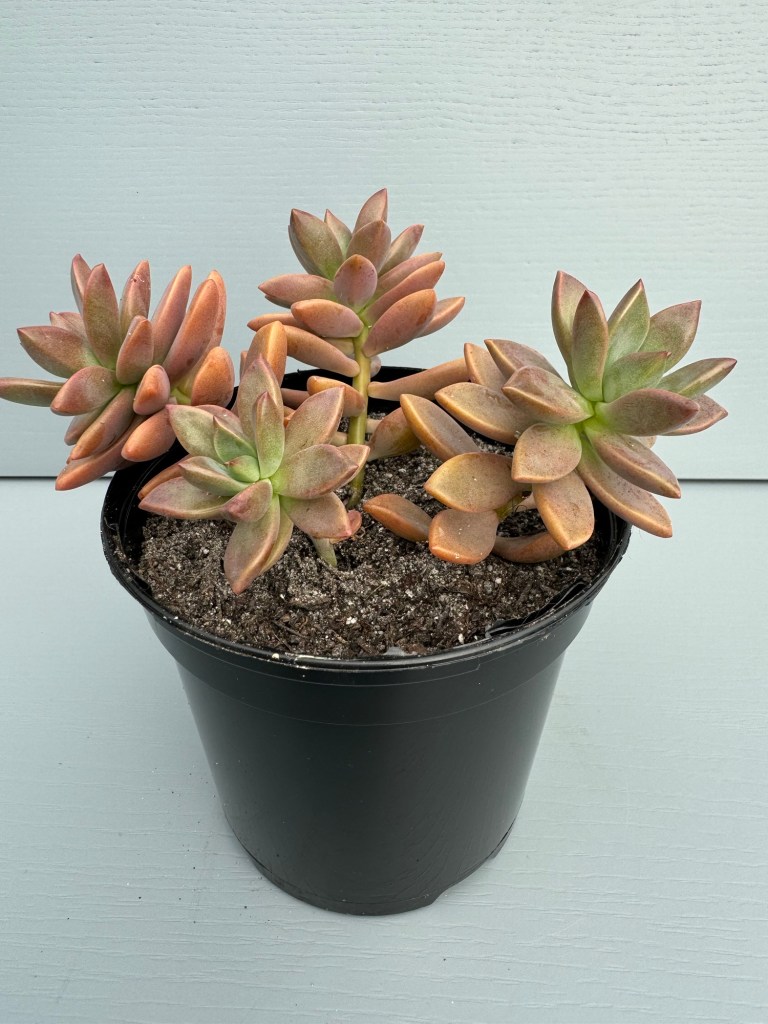
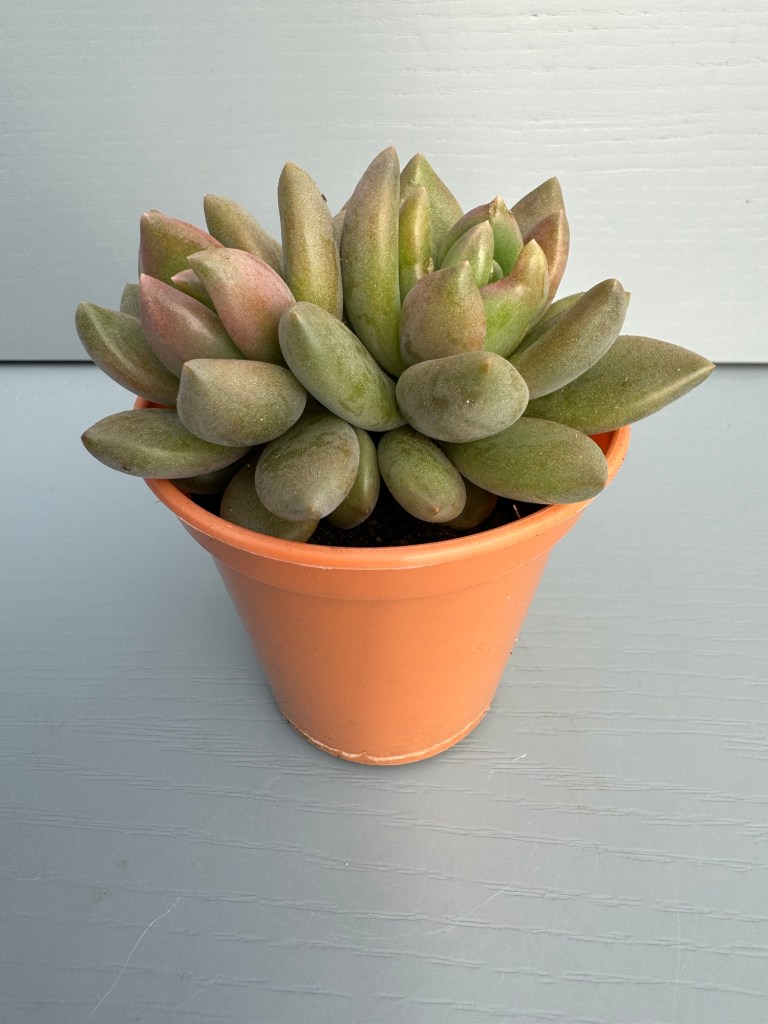
Pachyphytum ‘Dark Red’
An impressive succulent that produces clusters of upright and pointed lobes that become particularly red, almost turning black as they mature in relatively dry conditions. From the family Crassulaceae it is a relatively slow growing plant from Mexico. The rosettes are stemless and with age form large clumps. Will tolerate light frosts, as well as high heat, intense sunlight and poor soils. They produce drooping flower spikes with bell shaped flower of greenish white and deep red.
———————————————
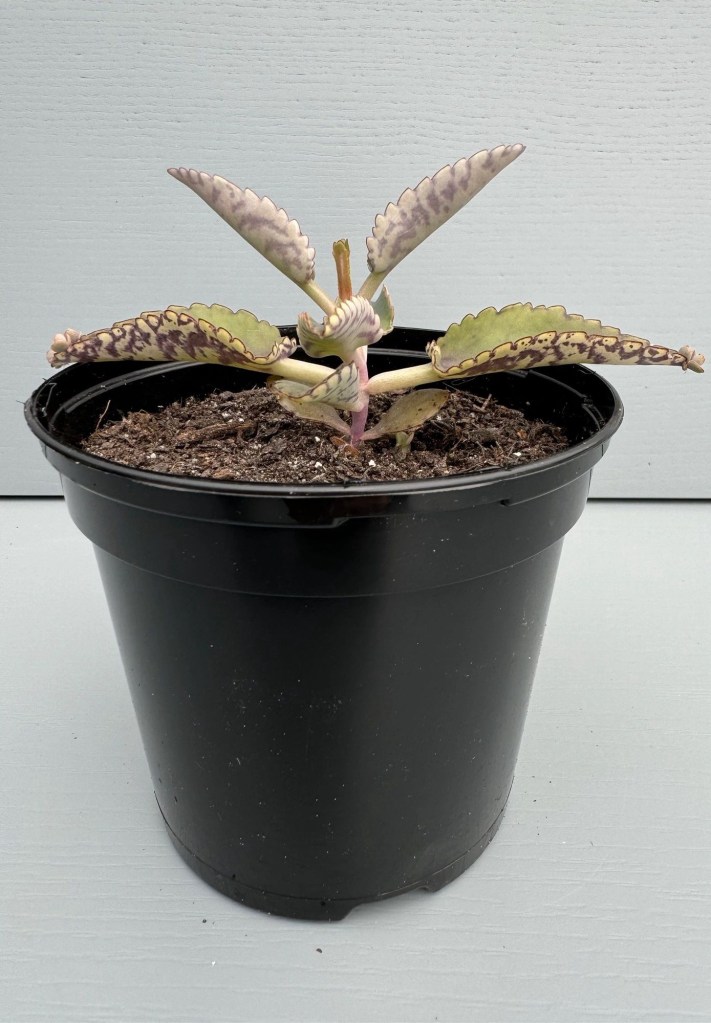
Kalanchoe daigremontiana
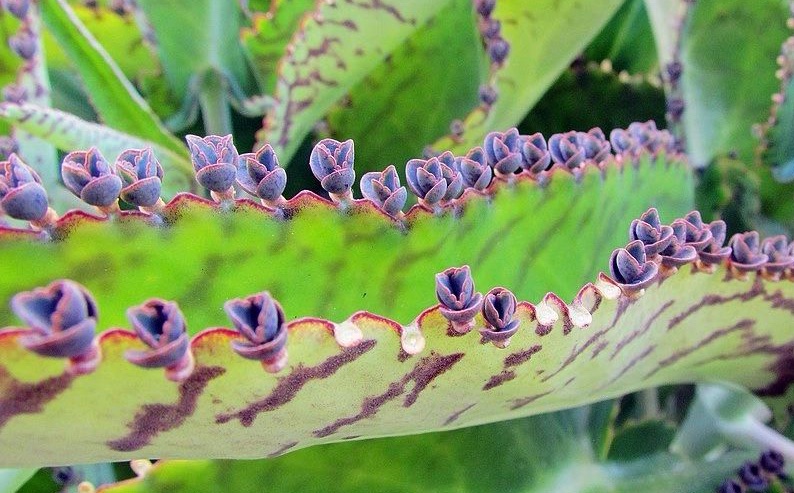
This unique succulent is native to Madagascar and is strangle known as Mexican hat. It produces platelets of the edge of its fleshy leaves, and also reproduces through upshots and seeds. Keep out of reach of pets as can be toxic if eaten. Can be an amazing inside plant with its distinctive architectural shape and patterns on the under leaves as well as the ability to thrive in dry and warm conditions, like modern central heated homes of today.
Please email: Cornishmaidgs@gmail.com for prices and any questions.
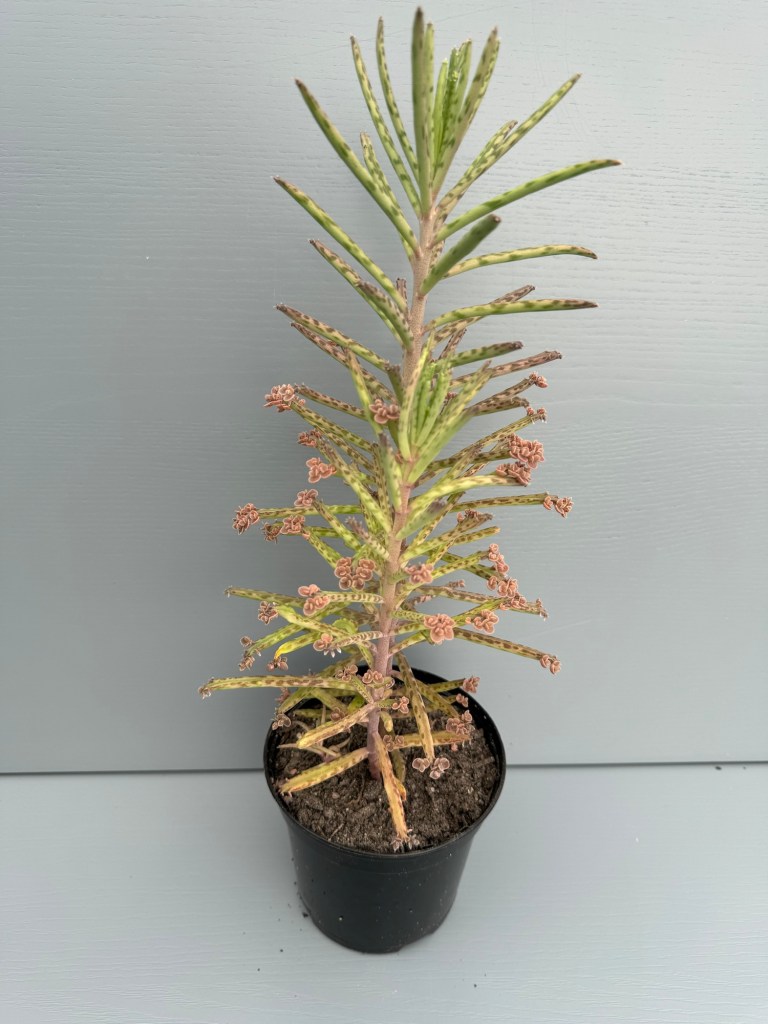
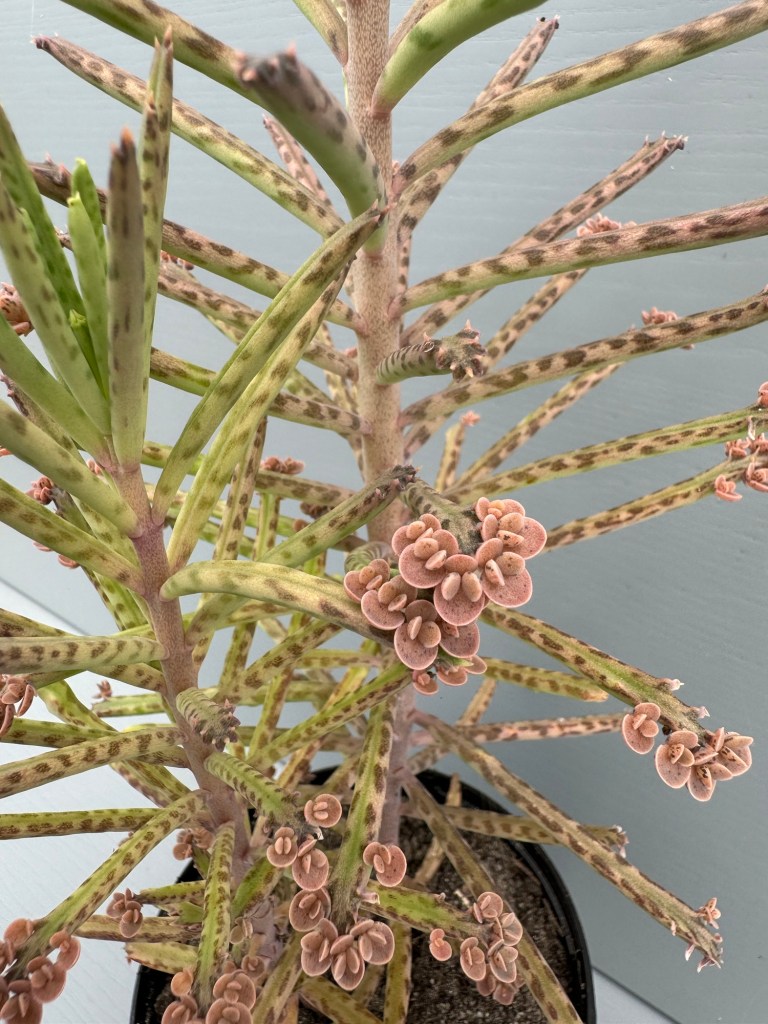
Kalanchoe tubiflora
An evergreen, drought tolerant, succulent, shrublet. It grows in an upright habit on a single fleshy green stem, which is very fine and tube like. Native to Madagascar, the leaves are pale silver green and vary in shades depending on amount of water and sunlight. On the edge of tube shaped leaves plantlet form.
Also known as Mother of Thousands this unique shaped plant is ideal for inside as like diffused light and minimal water. Protect from cold conditions and slugs if put outside for the summer.
———————————————
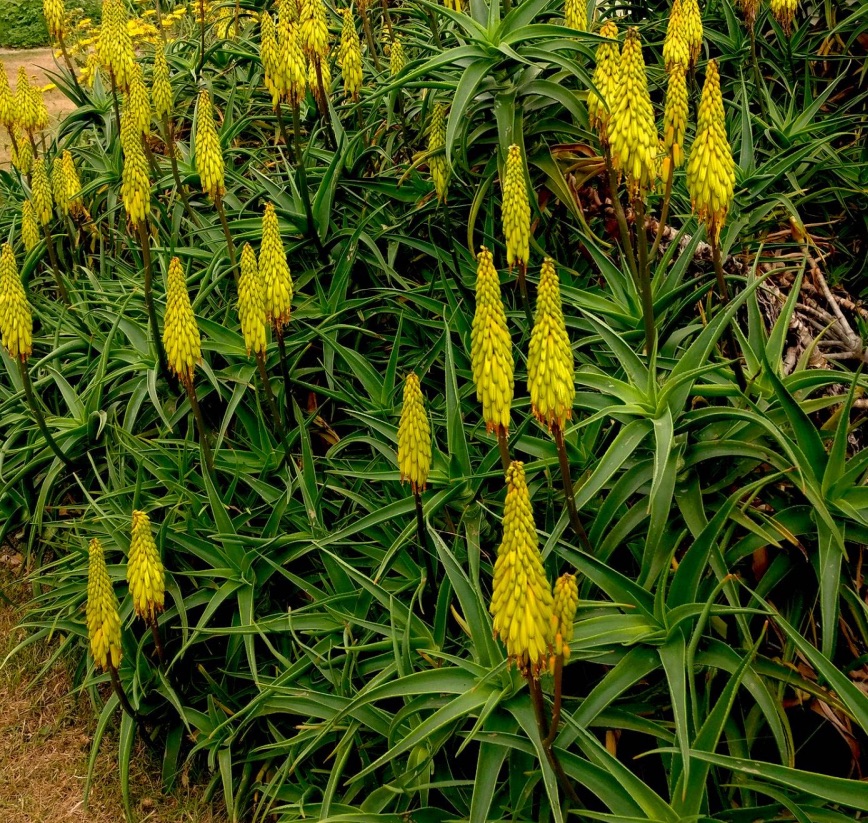
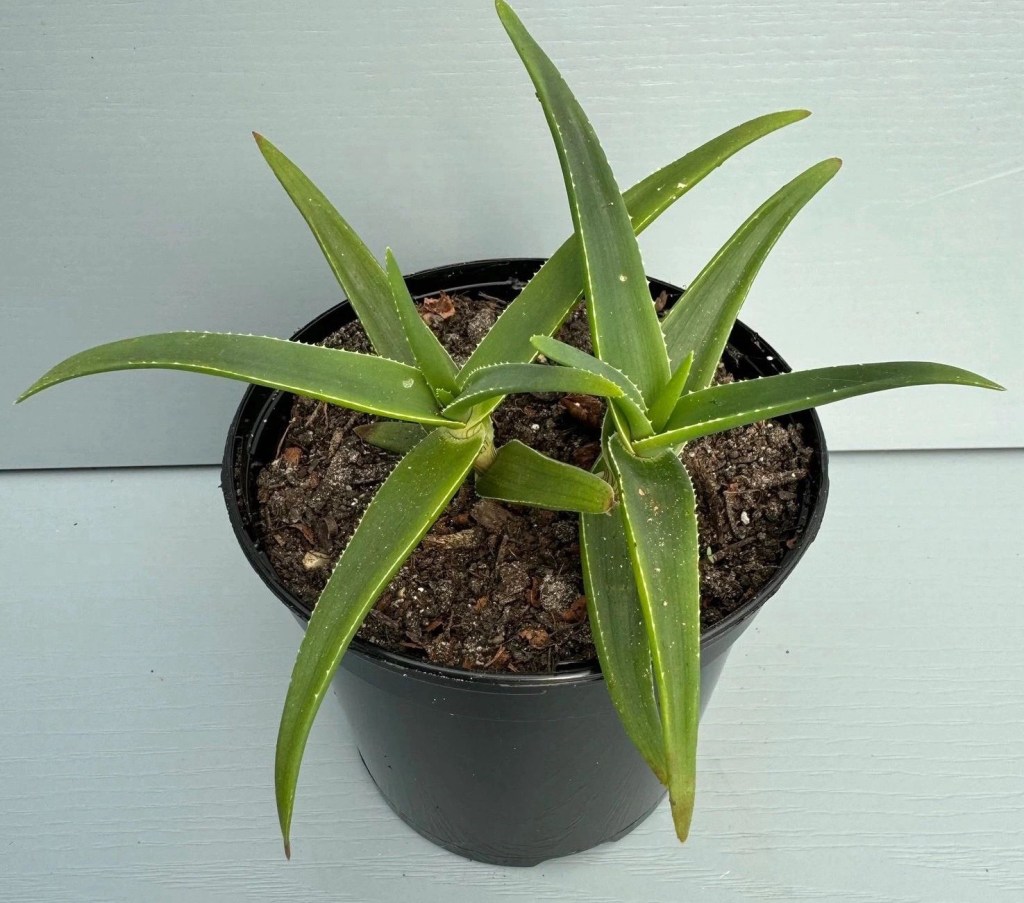
Aloe striatula
This impressive South African species is remarkable for its general toughness, it can survive dry summers and frosty winters and can grow outside in most uk areas. In summer it produces dramatic yellow spikes similar to Kniphofia, which bees find very attractive. Mature plants are approximately 60cm high and can spread to around a metre. Place in full sun with a sharply draining soil.
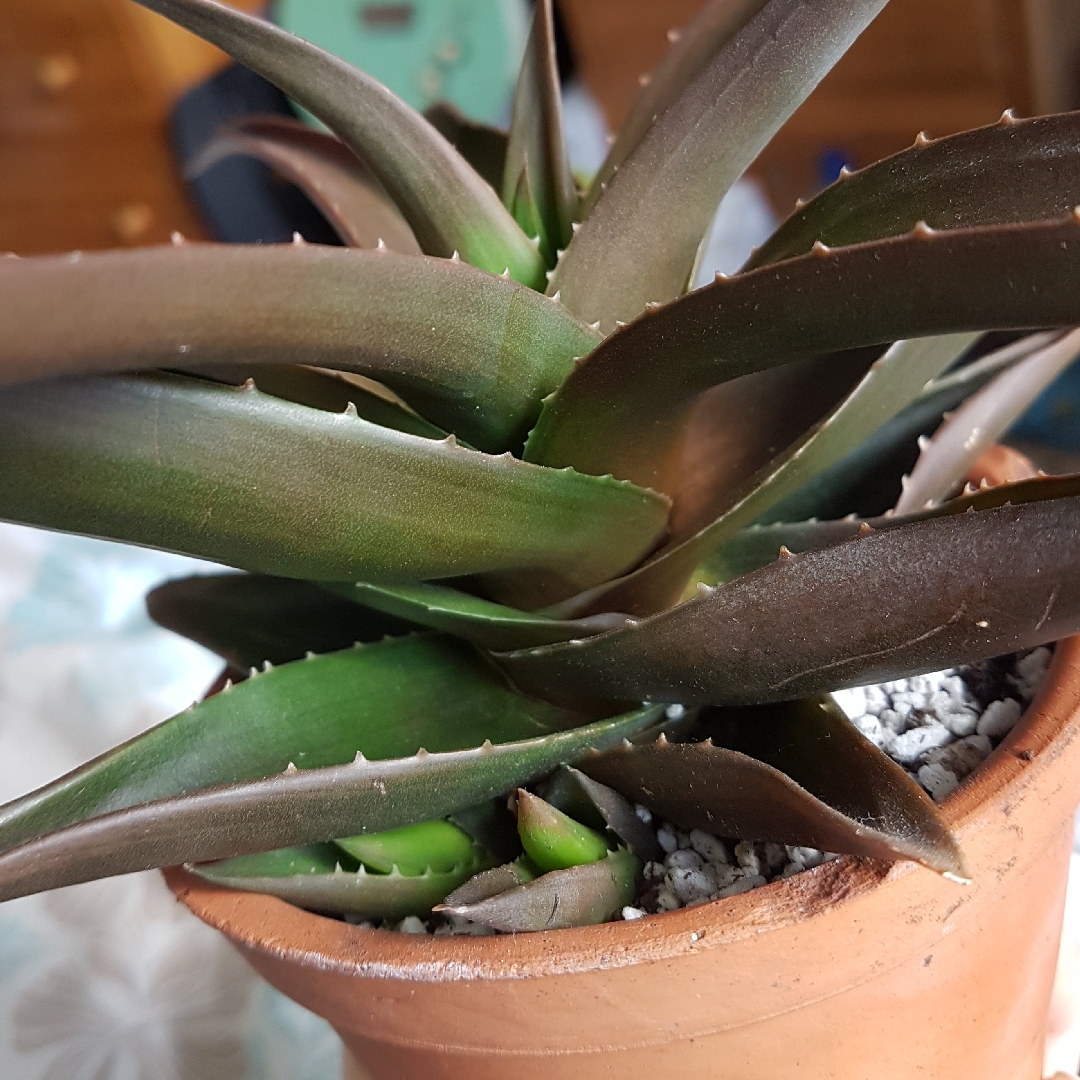
Alworthia ‘Black Gem’
A beautiful little exotic style plant with rich green fleshy leaves. An intergeneric hybrid of Aloe speciosa and Haworthia cymbiformis, The leaves become darker if placed in strong light, they also store water in their leaves so be sure to let the plant dry out completely between waterings. Grows to approx. 15cm high and can form a large compact clumps. Tolerates temperatures as low as 4C, hence not frost hardy
———————————————
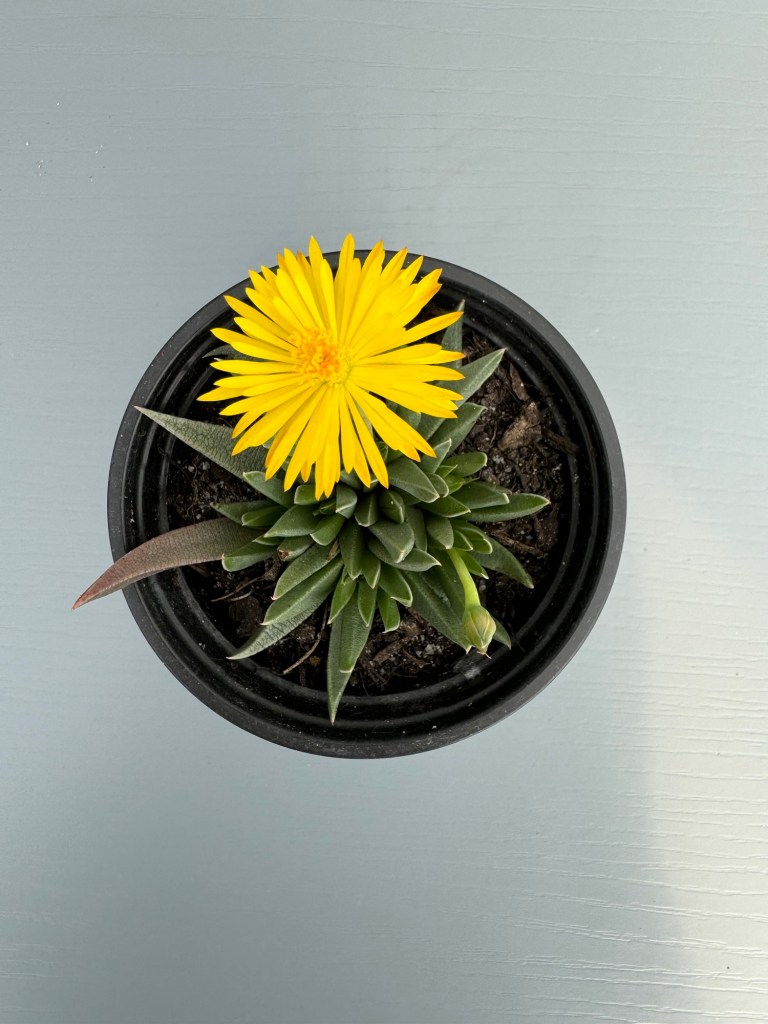
Bergeranthus multiceps
This lovely delicate flowering succulent grows on the sandstone outcrops on the Eastern Cape in South Africa. It is a very low growing variety, reaching just 10cm high and grows on a single fleshy rootstock that expands with age. The leaves are triangular in cross section and fleshy green with vivid yellow flowers that appear in spring, which bees and butterflies adore. Prefers full sun but can tolerate partial shade. Requires a sheltered location with free draining compost with plenty of grit. Not frost hardy.
———————————————
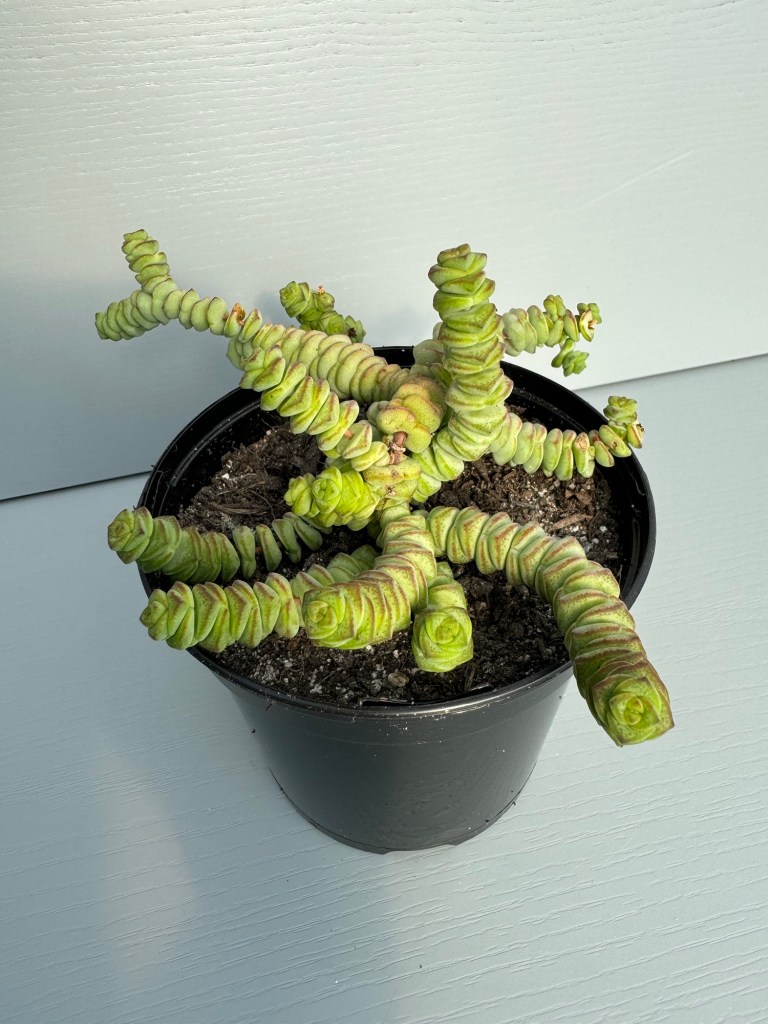
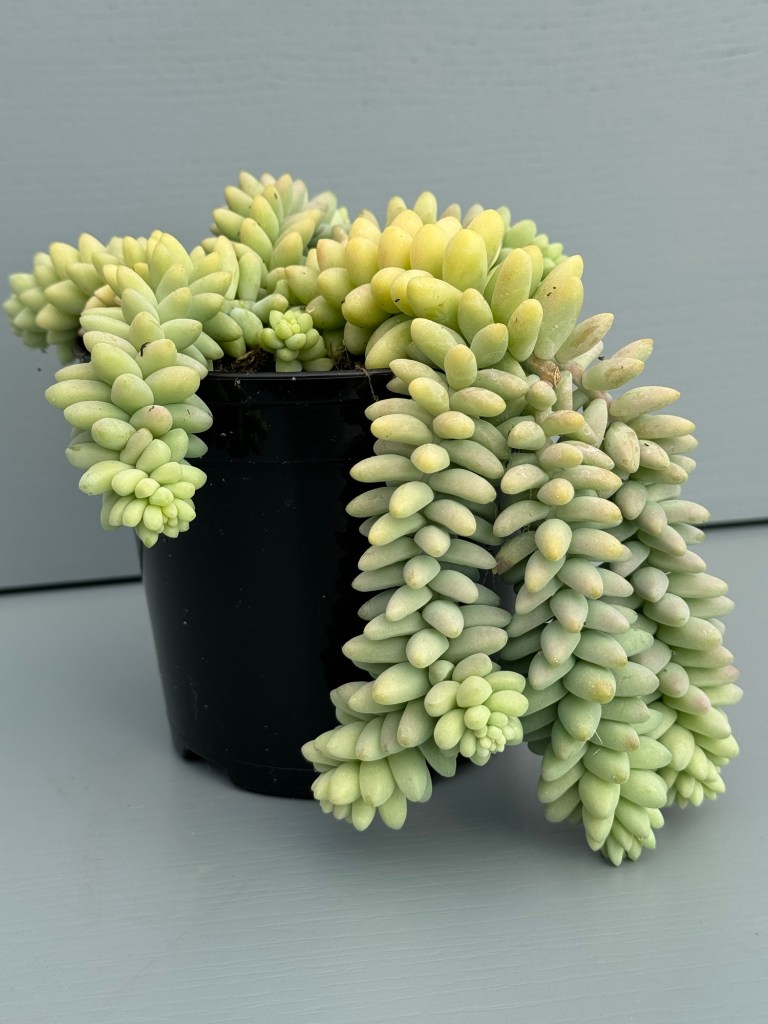
Crassula marnieriana
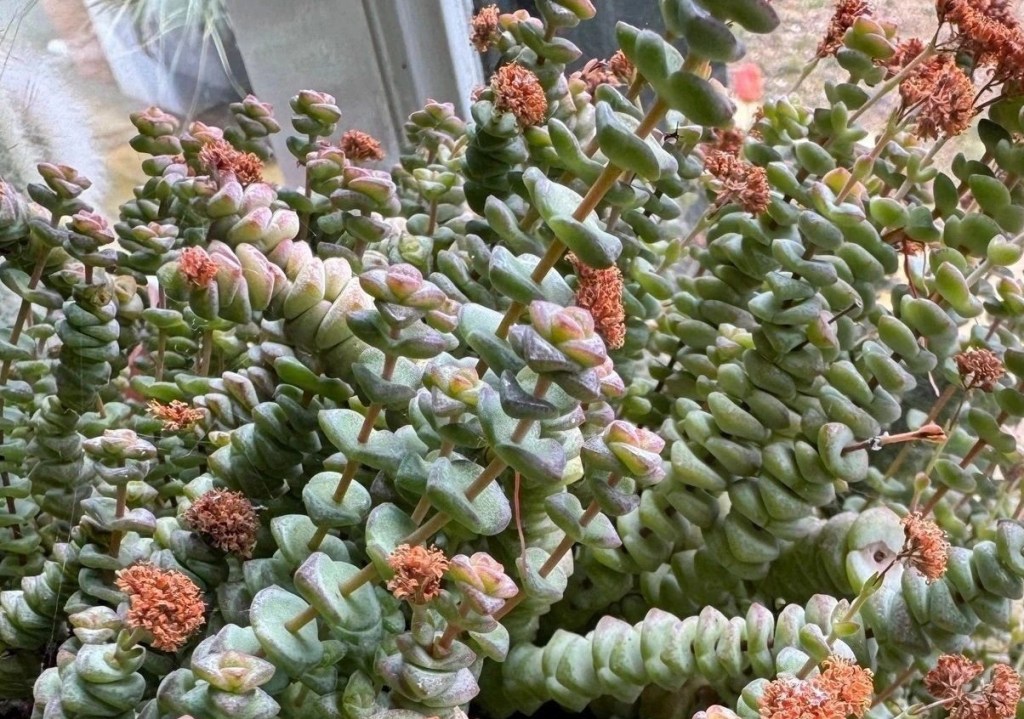
Also known as the jade necklace this lovely succulent has thick bean like leaves with red edges that increase with levels of sunlight. It has unusual trailing growth which as the plant matures gives an amazing show of stems flowing out over the pot sides. Crassula prefers full sun, grows to approx. 30cm over 5 years and originates from South Africa. Known as a houseplant in Western countries, but also loves the outside, in a sunny and sheltered position, with well drained aerated soil in summer. Bring inside during temperatures less than 5C.
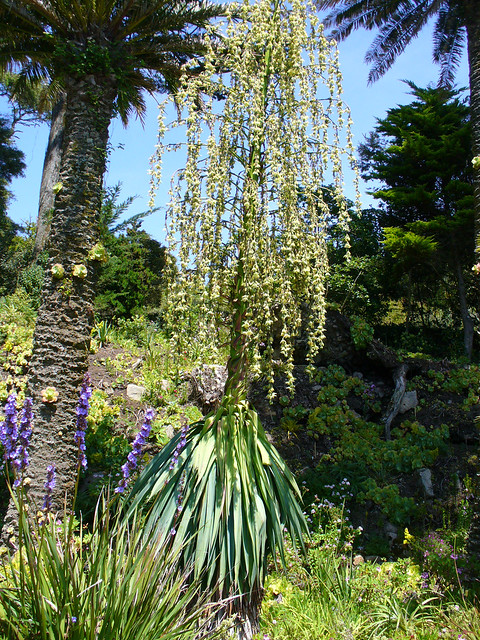
Furcraea parmentieri is endemic to Mexico, growing only in the Trans-Mexican Volcanic Belt. The young plants form a rosette of stiff, blue-grey leaves. As these plants mature, a tall trunk forms, which can reach a height of 3.5 meters, giving a palm-like appearance. Somewhere between the age of 15-50 years the plants send up an impressive, 3 meter-tall inflorescence bearing panicles of white to cream-coloured flowers. It is hardy to temperatures of -5°C provided it is planted in a dry, free-draining soil.They are drought tolerant but grow spectacularly quickly with lots of water.
——————————————-
Gasteria ‘Little Warty’
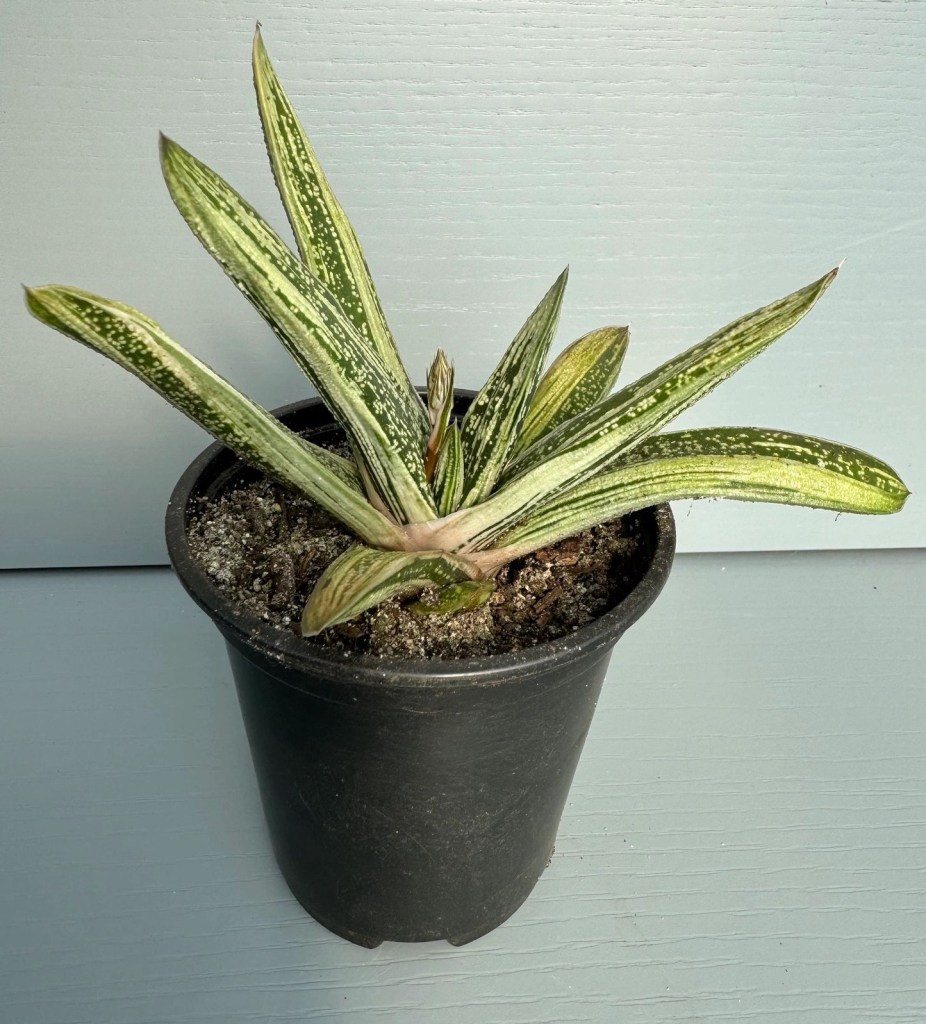
This is a well known funky little succulent has lovely light green leaves with white spots in vertical lines. The leaves are thick and fleshy. It can be fairly fast growing producing lots of offsets creating a large clump around a main mature plant. It grows to about 12cm high and 10 cm wide, prefers indirect sun light, little water and temperatures between 18-24C. As all Gasteria they can be toxic if consumed and originate from South Africa.
———————————————
Graptopetalum paraguayense minor
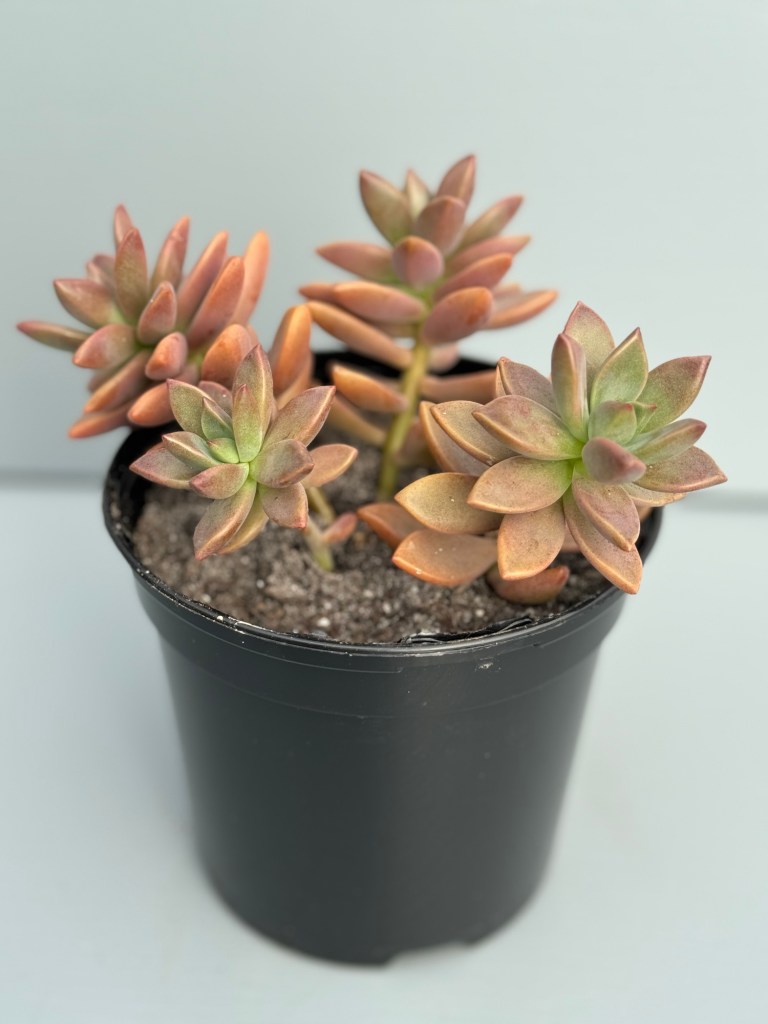
An attractive succulent with plump evergreen leaves in various colours depending on sunlight intensity and duration as well as maturity of plant. They can range from deep green to pink with red tinges. In summer they produce creamy white flowers that appear on thin long stems approx. 30cm long. Can survive outside in mild areas, but advisable to over winter in a cold greenhouse. Rosettes will get longer with time and trail over the sides of potted specimens.
———————————————
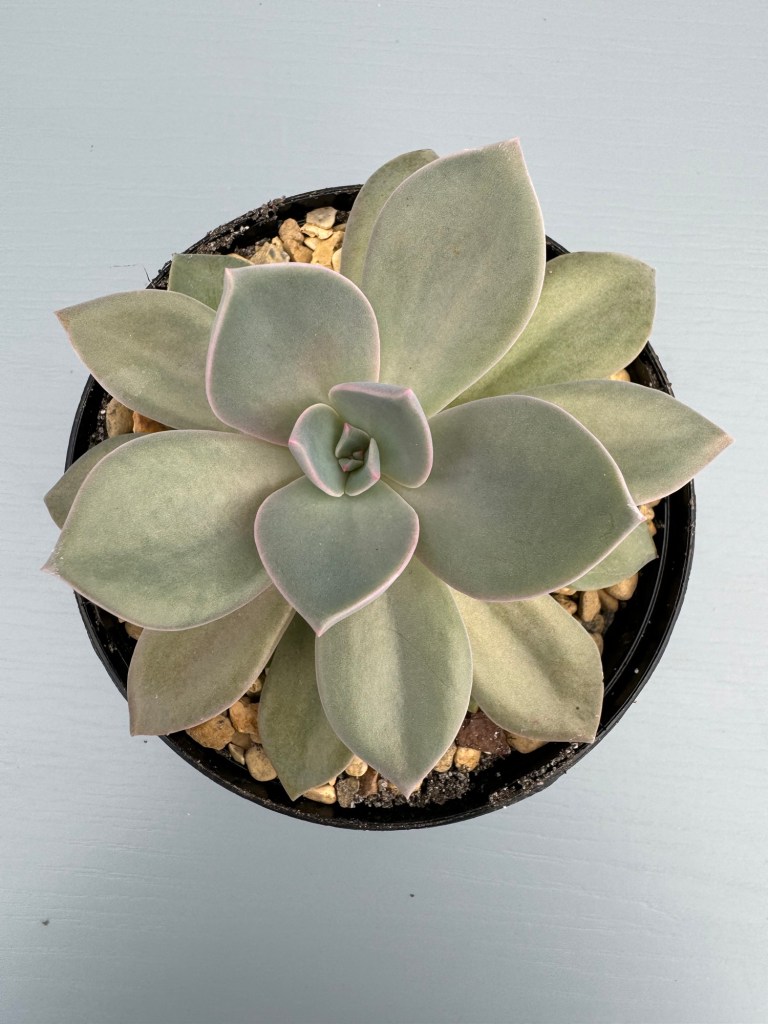
Graptopetalum paraguayense
Also know as Ghost Plant because of its pale bluish green leaves and powdery ghost-like appearance. This unique plant is native to Mexico but commonly grown as an ornamental plant in other parts of the world. The leaves are arranged in an open rosette pattern which can grow up to 35+cm in diameter. Numerous pinkish white flowers are produced in spring to summer. Ghost plants require full sun at least 6 hours a day to survive and much more to thrive Allow to dry out completely between waterings. Prefers temperatures between 18-27C.
———————————————
 cornishmaidplants.com