Echeverias
Echeverias are a large genus of succulent plants native to Central America. They are members of the Crassulaceae family. Echeverias are succulents that grow in many exciting sculptural forms.
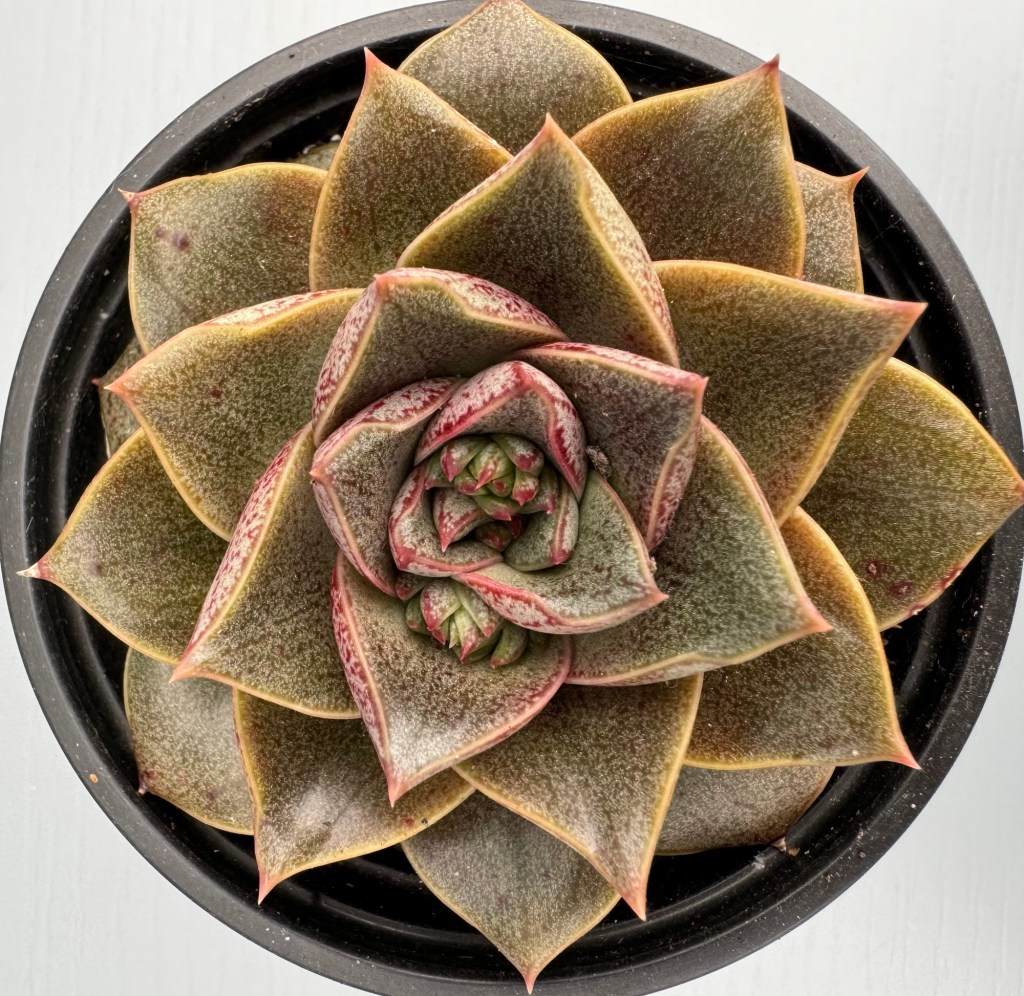
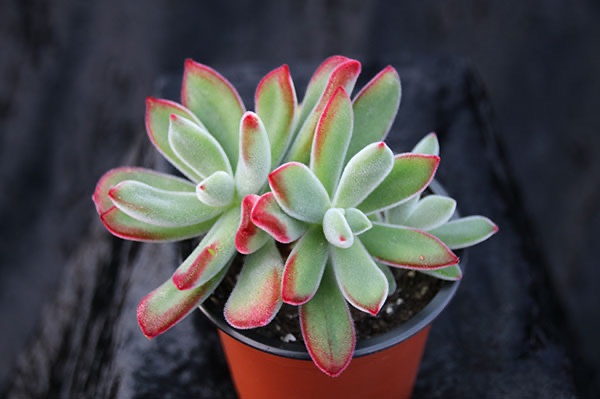
Echeveria purpusorum
This beautiful Echeveria with its tightly compacted leaves forms a delightful rosette, which reaches around 8cm in diameter. The leaves vary in green purple with a red edge which changes depending on light intensity and duration.Echeveria purpusorum is an easy plant to care for as long as you give it enough sunlight, water sparingly, but more than a cacti and protect it from cold conditions 5C and below.
——————————————————-
Please email: Cornishmaidgs@gmail.com for prices and any questions.
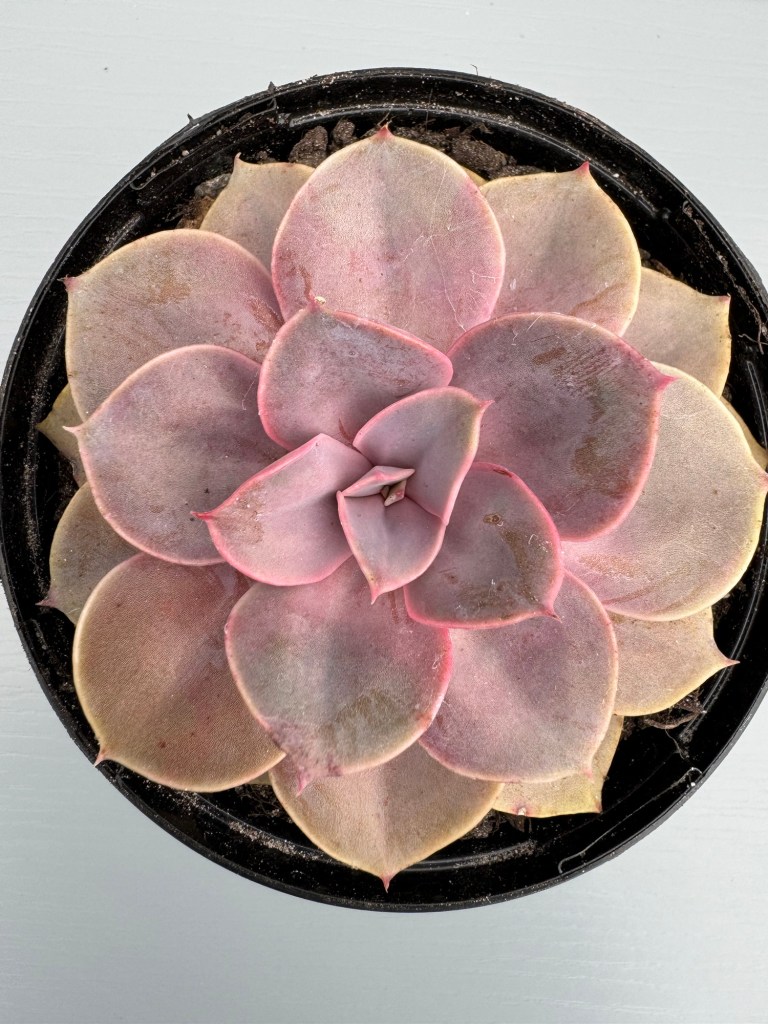
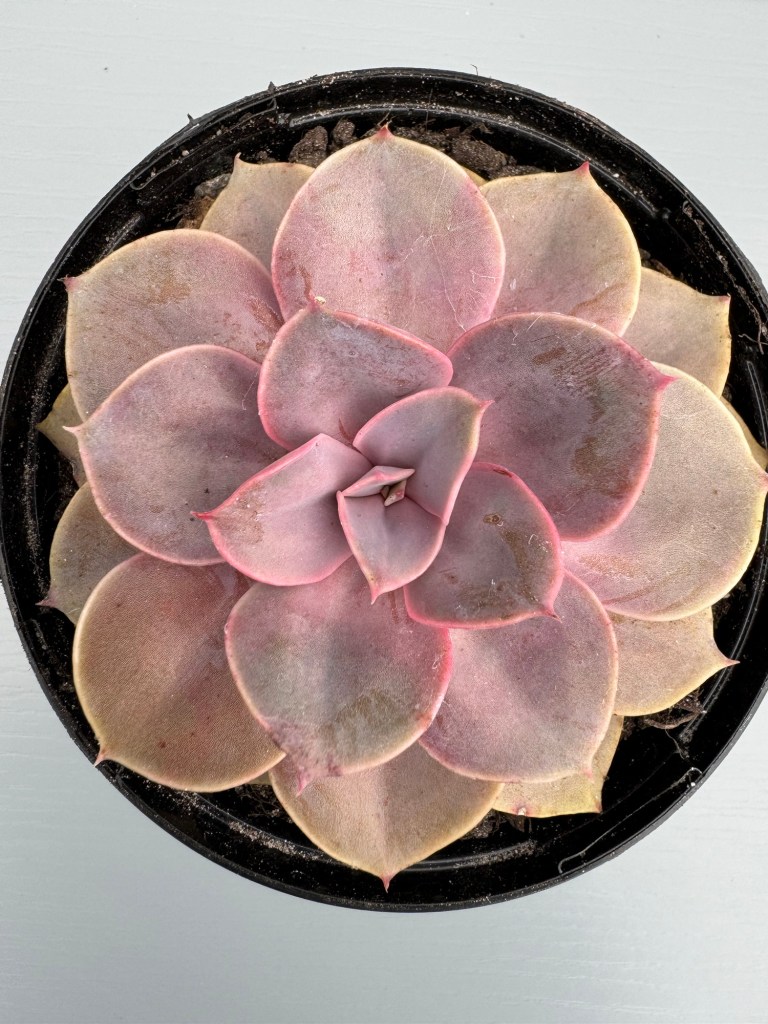
Echeveria Duchess of Nuremberg
This striking hybrid has origins in Mexico and as far as Central America forming rosettes up to 20cm in diameter. When you the leaves have a pink flush which gradually changes in to a more bronze look as they mature. Colours intensifies in stronger light. Never let water sit on the leaves of echeverias as the rosettes are susceptible to rot and fungal diseases which will kill the plant. Water sparingly in the winter and over winter in a greenhouse with fleece as not as hard as some echeverias.
———————————————
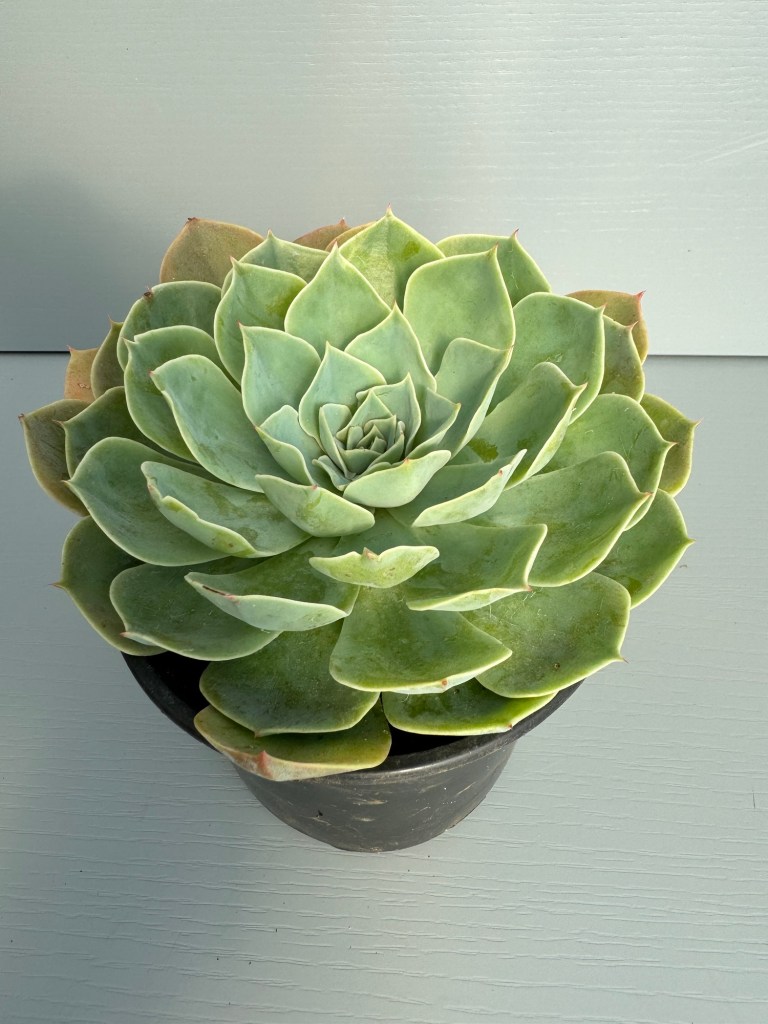
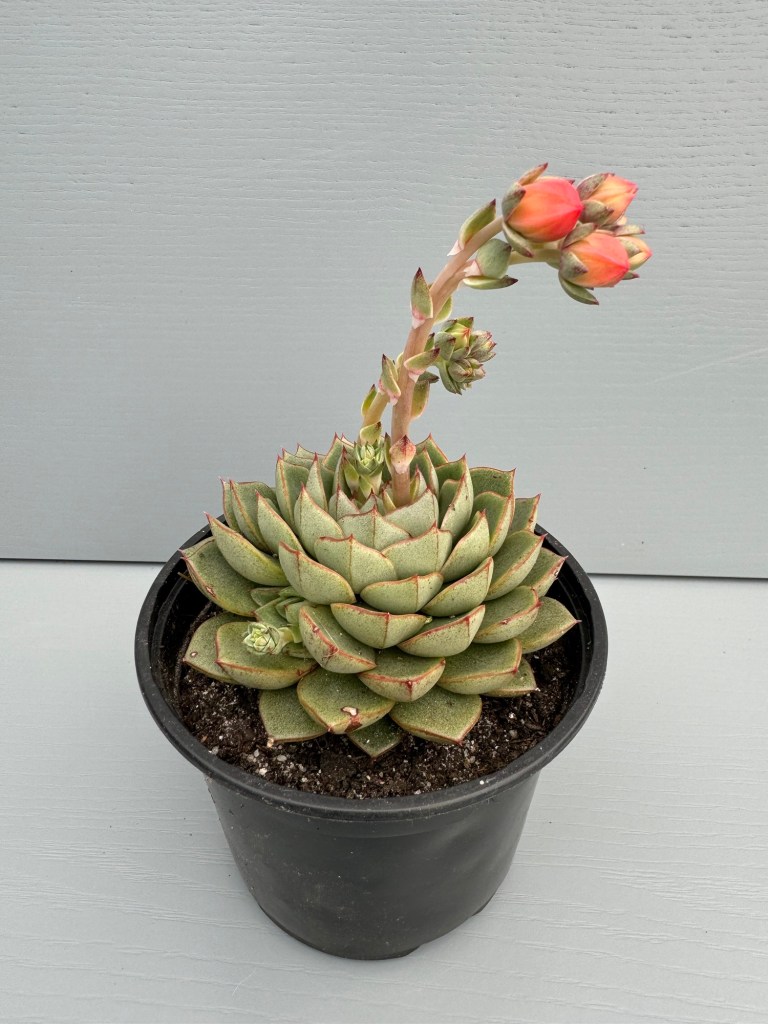
Echeveria imbricata
This plant has beautiful rosettes of tight grey/blue/green fleshy leaves, which produce many offsets, some rosettes can reach over 20cm in diameter. More mature plants can form large solid clumps of numerous rosettes. Flower spike appear in spring and summer with yellow orange bell shaped flowers. Keep dry in winter to prevent from rot.
E. imbricata is one of the oldest of hybrids and is a result of crossing E. glauca and E. metallica. Producing a perfect evergreen to display in any sunny garden or balcony.
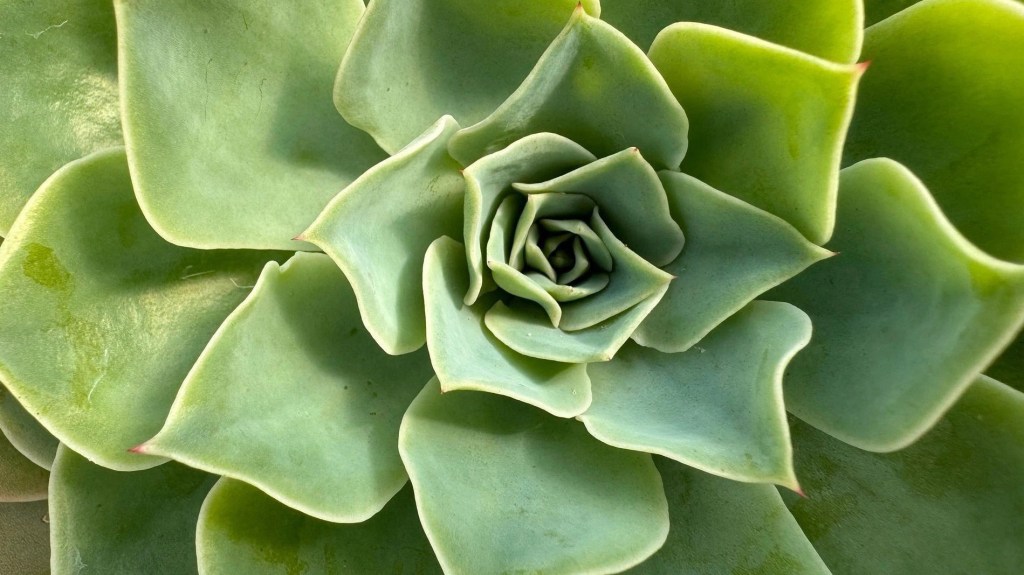
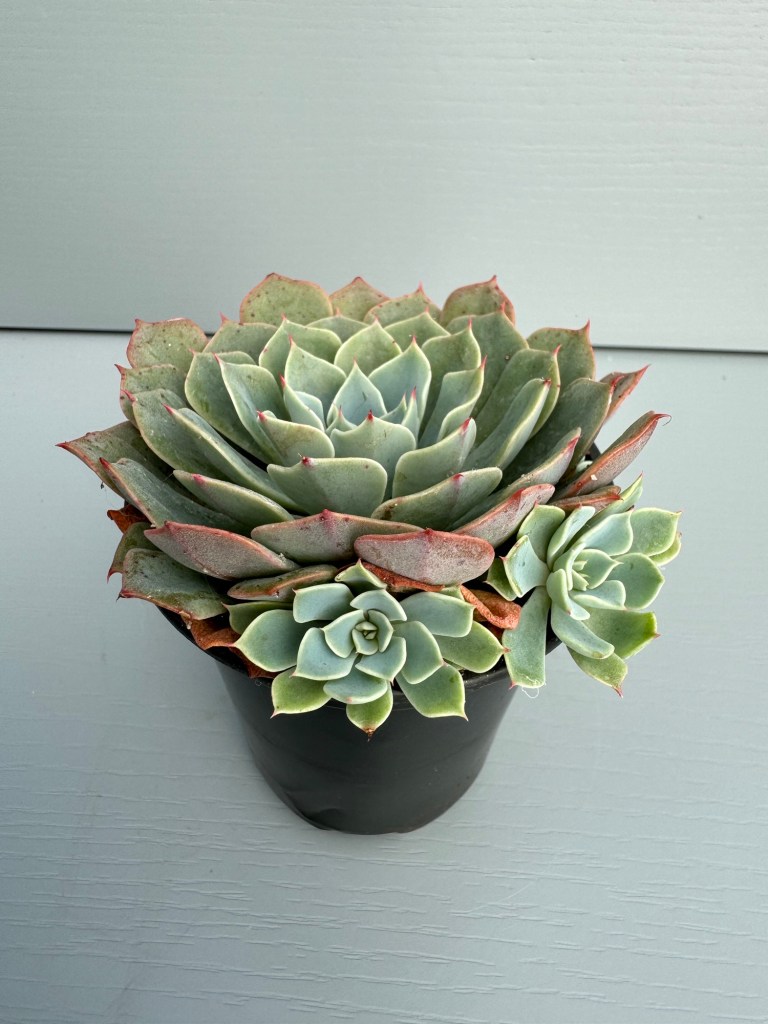
Echeveria glauca
Echeveria glauca has a fantastic powdery blue leaf which offsets freely. It is a popular species originating in Mexico. Old leaves produce pink/red blushes in full sun. They bloom in spring on long spikes with yellow and oranges bell like flowers. Not frost hardy, so if grown outside protect with fleece or plant where the rosettes are under a canopy.
———————————————-
 cornishmaidplants.com